
Trump's Tariffs: A Geopolitical Chess Move, not a Personal Tantrum
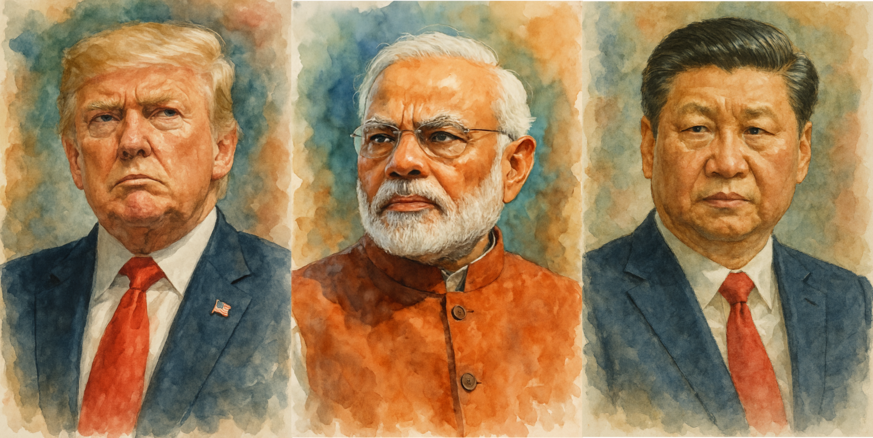
A few days ago, headlines screamed that U.S. President Donald Trump slapped a 50% tariff on Indian exports, targeting $87 billion worth of goods like textiles, gems, and footwear. The media painted it as Trump throwing a fit over India's purchase of Russian oil, framing it more like a personal grudge. "India's fuelling Russia's war machine," Trump posted on Truth Social, calling India's economy "dead." His brash style makes it easy to buy into this narrative: a bully lashing out. But geopolitics isn't a Bollywood masala film. The tariffs represent a calculated U.S. strategy to maintain global dominance as power shifts worldwide.
Realpolitik—nations acting purely in self-interest—drives this move. The U.S. economy, worth $30 trillion, sees India's rapid growth as both an opportunity and a threat. India's rise, alongside China's emergence as an $18 trillion powerhouse, signals a multipolar world where no single nation calls all the shots. The tariffs aren't just about Russian oil imports. They're part of broader American efforts to constrain emerging powers, while regional players add their own pressure. India, however, isn't sitting idle—it's playing a strong hand, diversifying trade and asserting its interests.
This isn't black-and-white; it's shades of grey, where contingency—unpredictable outcomes from competing interests—shapes outcomes more than any master plan. For the Indian public, understanding this chess game is crucial to seeing beyond media spin.
The Tariffs and Their Economic Reality
Trade forms the lifeblood of modern economies. Exports generate revenue, create jobs, and fund growth. India's export sectors employ millions, especially in textiles and gems, where small businesses thrive. A tariff increases costs for U.S. buyers, making Indian goods pricier than those of competitors. This shrinks market share, reduces profits, and eliminates jobs. India's trade surplus with America reached $45.8 billion in 2024, reflecting competitive advantages Washington wants to curb.
On August 6, 2025, Trump signed an executive order imposing an additional 25% tariff on Indian goods, raising the total to 50% after an initial 25% levy days earlier. These measures hit India's largest export market, covering textiles worth $8 billion annually, gems and jewellery at $10 billion, leather goods, auto parts generating $7 billion, and seafood. Washington claims India's daily import of 1 million barrels of Russian oil funds Moscow's war in Ukraine, justifying tariffs as punishment. India's Ministry of External Affairs called the move "unfair, unjustified, and unreasonable," noting that other nations, including China, also buy Russian oil without similar punishment. The U.S. accounts for 18% of India's total goods exports of $483 billion. These tariffs create a 30–35% cost disadvantage compared to competitors like Vietnam and Bangladesh, who face lower American duties.
A PHD Chamber of Commerce report estimates an initial $8 billion export hit, with broader effects as duties fully apply. Textiles and auto components face severe risks, with potential layoffs in labour-intensive industries. Economists project modest but significant GDP contraction as U.S. buyers like Walmart and Amazon pause orders, seeking alternatives.
Trump's rhetoric—calling India a "tariff king" and mocking its economy—amplifies visibility. His "Make America Great Again" agenda prioritises reducing trade deficits. However, this policy isn't just Trump's creation. America has long pressured India to open markets, with stalled trade talks under Biden and Obama over agriculture and dairy access. The tariffs reflect a broader U.S. strategy to protect economic dominance, not merely a personal vendetta.
The Geopolitical Chessboard
America views India's projected growth to a $7 trillion economy by 2030 as double-edged. India's role in the Quad alliance counters China's Belt and Road Initiative, which has invested $3.5 trillion globally. However, India's BRICS membership and Russian military ties frustrate U.S. efforts to align it fully against China and Russia. The tariffs signal America's attempts to discipline India, ensuring it doesn't grow too independent. Recent U.S. arms sales to Pakistan, worth $650 million, raised Indian concerns, suggesting tactics to keep India off balance in South Asia. This follows historical patterns where great powers check rising ones. In the 1980s, America backed the Afghan mujahideen to weaken the Soviet Union. In the 2000s, Iraq's invasion disrupted Middle Eastern stability while benefiting U.S. oil and defence interests.
China plays its own strategic game. Its $62 billion China-Pakistan Economic Corridor strengthens Pakistan, India's rival, while investments in Bangladesh and the Maldives fuel anti-India sentiment. Beijing's larger Russian oil purchases face no U.S. tariffs, suggesting selective American enforcement. This could reflect a strategy to avoid direct confrontation with China while using India as a lever. Trump's bombast grabs headlines, but the tariffs align with strategic goals predating his presidency. The Biden administration's 2022 price cap on Russian oil actually encouraged India's purchases, yet Trump now punishes them. This inconsistency points to deeper American aims: maintaining leverage over India rather than settling grudges. The 21-day window before the second tariff tranche suggests room for negotiation—classic diplomatic pressure tactics.
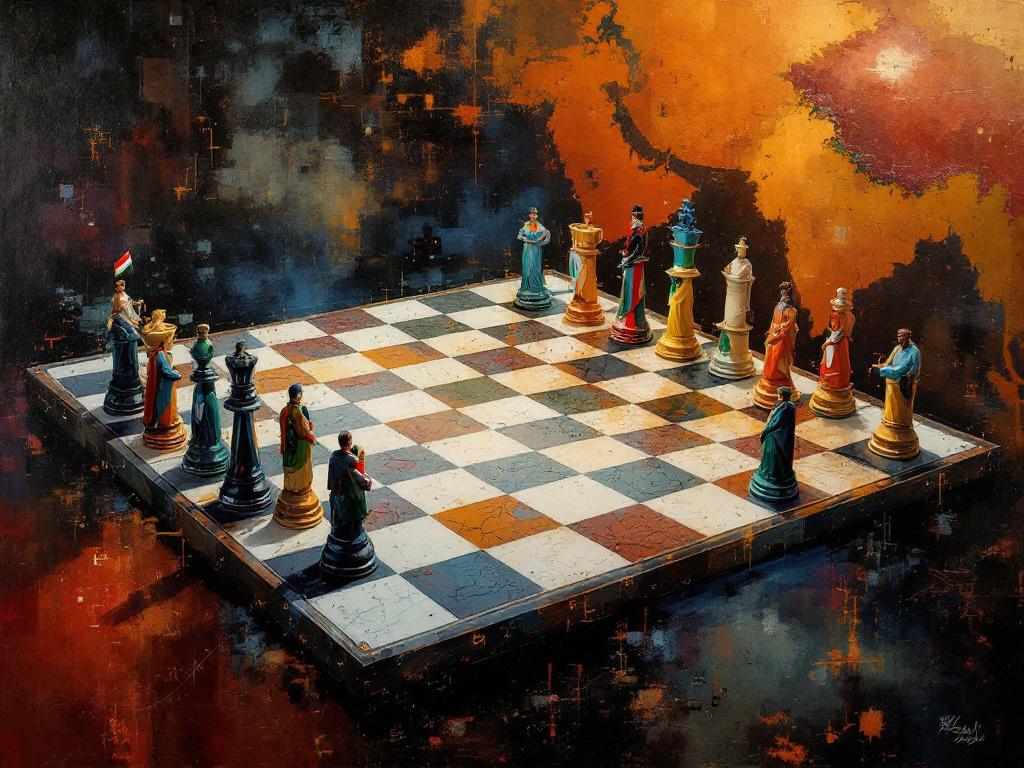
India isn't standing still. Historically, India played a non-aligned role during the Cold War, balancing U.S. and Soviet ties. After the 1991 reforms, its economy grew from $270 billion to $4 trillion by 2024, making it a global player. Nuclear status and 1.4 billion people demand energy security, hence Russian oil purchases. India's Quad participation counters China, but BRICS ties preserve autonomy. With $700 billion in foreign reserves, India is pivoting toward new markets. Trade with the EU reaches $100 billion while ASEAN partnerships expand, reducing American dependency. Indian officials like Commerce Minister Piyush Goyal stress "national interest" over rushed trade deals, rejecting U.S. agricultural demands. Business leaders see tariffs as opportunities for reforms, similar to the 1991 liberalisation that spurred growth.
India counters Chinese influence through aid to neighbours. Support to the Maldives, whose tourism relied 80% on Indian visitors, exemplifies this approach. Maintaining Russian defence partnerships while deepening UAE and EU relations demonstrates strategic balancing. Prime Minister Modi's February 2025 U.S. visit aimed for a $500 billion trade deal by 2030, but India's firm stance on protecting farmers and energy security shows it won't bend easily. India's Operation Sindoor targeted terror camps both inside Pakistan and in Pakistan-occupied Kashmir after the Pahalgam terrorist attack. Some foreign reports suggest even bolder Indian moves. Pakistan claimed India backed Baluchistan attacks, like the 2024 Gwadar bombing, disrupting China’s CPEC. Six alleged assassinations in 2024, linked to anti-India figures, drew U.S. scrutiny, including an indictment over one plot. These remain unacknowledged by India, but they suggest a proactive stance against regional threats, balancing covert action with diplomatic restraint to avoid Western backlash.
South Asian rivalry runs deep. India-Pakistan tensions from the 1947 partition continue over Kashmir and terrorism. China's Belt and Road Initiative has poured billions into India's neighbours since 2013, creating economic dependencies that fuel anti-India sentiment. Pakistani anti-India rhetoric, amplified by Chinese support, keeps tensions high. Bangladesh's post-Hasina protests and the Maldives' "India Out" campaigns again reflect Chinese influence operations. Myanmar's Rohingya crisis adds complexity with Beijing's backing. These moves suggest China’s aim to encircle India, while U.S. ambiguity—neither condemning nor supporting—implies tacit approval to keep India distracted. India counters with aid and diplomacy, like scholarships and cultural centres via the ICCR, to win back neighbours like the Maldives.
But geopolitics defies scripted plans. India's warming ties with Russia and China post-tariff announcement—evidenced by NSA Ajit Doval's Moscow visit and PM Modi’s planned China visit for the SCO Summit—could strengthen BRICS cooperation or spark American retaliation. The 21-day tariff window offers diplomatic chances, but missteps could worsen relations. This contingency—where no one fully controls outcomes—defines global power dynamics.
Understanding the Deeper Game
Trump's 50% tariffs aren't personal tantrums but American moves to maintain dominance in an increasingly multipolar landscape. Russian oil purchases provide a convenient pretext; the real goal involves checking India's rise alongside China's might. Regional pressures from Chinese investments and American arms sales create complex dynamics where India must navigate carefully. Yet India is no mere pawn. Strategic diplomacy, economic diversification, and $700 billion reserves position it to weather this storm. India is strengthening EU and ASEAN ties while maintaining Russian partnerships and countering threats through various means.
The world doesn't follow anyone's script. Contingency shapes events more than American, Chinese, or Indian master plans. For common citizens, grasping this realpolitik matters: nations act for power and interests, not friendship. Media focus on Trump's theatrics obscures deeper truths about how great powers manoeuvre. Understanding these forces helps us see beyond daily headlines to recognise the intricate dynamics shaping India's path forward. Rather than personal grudges or simple trade disputes, we're witnessing calculated moves in a grand strategic competition that will define the coming decades.

Arjun
Please feel free to leave your comments and suggestions...






Leave a Reply
Your email address will not be published. Required fields are marked *
Comments (0)